
Heat Pump Systems Hub
Heat Pump Systems in North Texas
Heat pumps are increasingly considered for North Texas homes because they provide both heating and cooling from one system. When performance falls short, the cause may involve the equipment, capacity selection, airflow, ductwork, controls, installation or commissioning. Too Cool Air evaluates the complete system before recommending a correction or replacement.
Considering replacing gas heat with an all-electric or dual-fuel system? The Heat Pump Electrification Guide explains how load, ductwork, airflow, electrical capacity and cold-weather planning shape that decision. For a broader comparison, read the heating-system comparison guide.
Existing heat pump not heating, cooling or defrosting correctly? Start with diagnostic-first heat pump repair, or read our no-heat troubleshooting guide for safe checks before you call.
What a heat pump is, in one paragraph
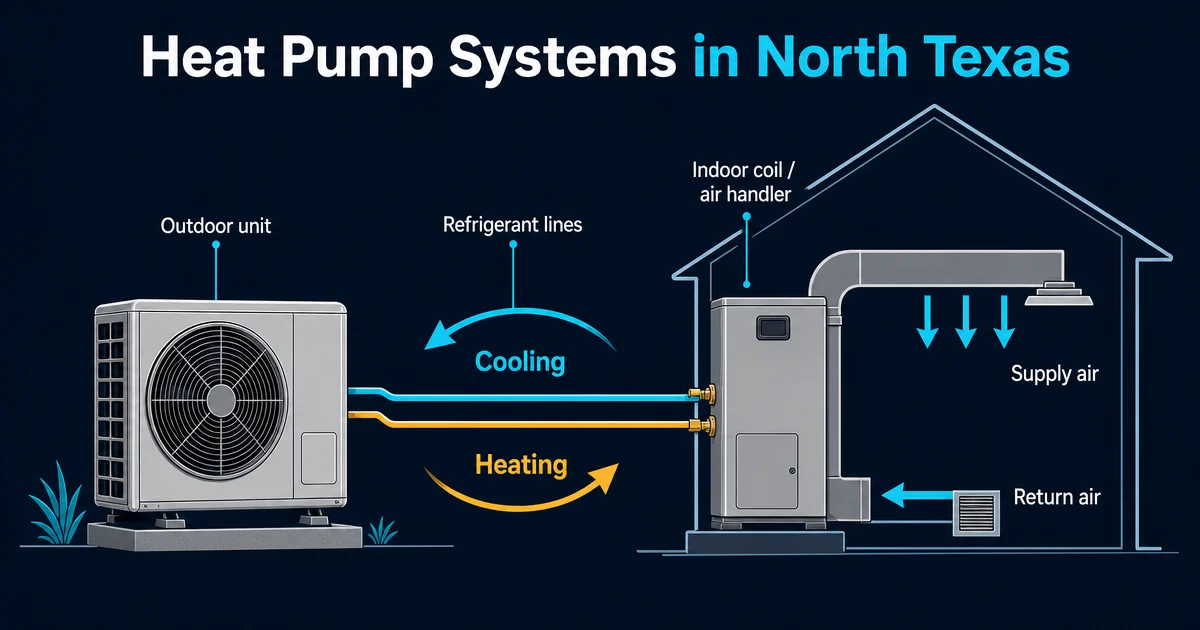
A heat pump is an air conditioner that can run in both directions. In summer it moves heat out of the house; in winter a reversing valve sends the refrigerant the other way and it collects heat from outdoor air and releases it indoors. Because it moves heat rather than creating it, it can deliver more heating energy than the electrical energy it consumes — and because it draws from outdoor air, the heating capacity available falls as the outdoor temperature falls. Every meaningful design decision in a heat pump project follows from those two facts.
Start with the symptom
Most homeowners arrive here with a complaint rather than a specification. Find the one that matches your home and start with that guide — each one explains what we measure first and what the reading can and cannot tell us.
What you notice
System cools fast, then shuts off; the house still feels sticky.
What we measure first
Runtime behaviour, indoor humidity, and a review of how capacity was chosen.
Heat Pump Sizing in Texas (Manual J & Manual S)What you notice
Weak airflow at registers, noisy ducts, rooms that never catch up.
What we measure first
Total external static pressure compared with the manufacturer's blower data.
Static Pressure and Heat Pump PerformanceWhat you notice
Cold but clammy rooms, condensation, musty smell in summer.
What we measure first
Indoor relative humidity, runtime length, airflow, and outdoor-air paths.
Heat Pump Humidity Problems in North TexasWhat you notice
You are replacing a system and cannot tell which heating type fits.
What we measure first
Existing fuel service, duct capacity, load, and how the home is used.
Heat Pump vs. Gas Furnace in TexasWhat you notice
You already have gas heat and are considering a heat pump.
What we measure first
Utility rates, equipment capacity at low outdoor temperatures, and controls.
Dual-Fuel Heat Pumps in North TexasWhat you notice
Two quotes for the same house are thousands of dollars apart.
What we measure first
Scope comparison: capacity basis, duct work, electrical, and commissioning.
Heat Pump Cost in DFW
| What you notice | What we measure first | Guide |
|---|---|---|
| System cools fast, then shuts off; the house still feels sticky. | Runtime behaviour, indoor humidity, and a review of how capacity was chosen. | Heat Pump Sizing in Texas (Manual J & Manual S) |
| Weak airflow at registers, noisy ducts, rooms that never catch up. | Total external static pressure compared with the manufacturer's blower data. | Static Pressure and Heat Pump Performance |
| Cold but clammy rooms, condensation, musty smell in summer. | Indoor relative humidity, runtime length, airflow, and outdoor-air paths. | Heat Pump Humidity Problems in North Texas |
| You are replacing a system and cannot tell which heating type fits. | Existing fuel service, duct capacity, load, and how the home is used. | Heat Pump vs. Gas Furnace in Texas |
| You already have gas heat and are considering a heat pump. | Utility rates, equipment capacity at low outdoor temperatures, and controls. | Dual-Fuel Heat Pumps in North Texas |
| Two quotes for the same house are thousands of dollars apart. | Scope comparison: capacity basis, duct work, electrical, and commissioning. | Heat Pump Cost in DFW |
Three protocols decide whether a heat pump performs
The industry references three ACCA protocols, and they are frequently collapsed into the single phrase "we sized it right." They are separate steps and they answer separate questions.
Manual J — the load
A room-by-room calculation of how much heating and cooling the home needs, based on windows, orientation, insulation, infiltration, duct location and local design temperatures. It replaces square-footage rules and old-nameplate matching with a number derived from the building itself.
Manual S — the equipment
Selection from published manufacturer performance data at local design conditions, including how capacity splits between temperature and moisture removal, and how much heating output remains on the coldest mornings. A nominal tonnage is a category, not a performance figure.
Manual D — the ducts
Duct design that sizes trunks, branches and returns so the required airflow reaches each room within the blower's available static pressure. Correct equipment on an undersized duct system still produces comfort complaints.
Read them in order and the pattern is clear: capacity is meaningless without delivery, and air delivery can be overlooked when a replacement proposal focuses primarily on the equipment. Our ductwork and airflow hub covers the delivery side in detail.
What North Texas conditions demand
Our climate produces a long, humid cooling season and a short, variable heating season. That combination shapes the priorities differently than it would in a colder or drier region.
On the cooling side, the moisture load matters as much as the temperature load. Moisture removal accumulates while the system runs, so a system that satisfies the thermostat in short bursts leaves humidity behind. The uncomfortable days are not always the hottest ones — the mild, overcast, heavy-air days in May and October produce very little temperature load and plenty of moisture, which is exactly when oversized equipment performs worst. The humidity and moisture hub covers the building-side causes that make this worse.
North Texas experiences many mild heating hours, when properly selected heat pumps can operate efficiently. The design question is what happens during the genuinely cold mornings each winter, and how supplemental heat is controlled so that it engages when it is needed rather than by default.
Attics add a third factor. Many North Texas homes have ductwork running through unconditioned attic space that reaches extreme temperatures in summer, so duct leakage and insulation quality have a direct effect on what actually reaches the rooms.
Heat Pump Guides
The six guides in this hub
Heat Pump Sizing in Texas (Manual J & Manual S)
How capacity is calculated, and why matching the old tonnage is not a sizing method.
Read the guide →Static Pressure and Heat Pump Performance
How duct restriction limits airflow and keeps a variable-speed system from doing its job.
Read the guide →Heat Pump Humidity Problems in North Texas
Why a home can hit the thermostat setting and still feel damp — and what we check.
Read the guide →Heat Pump vs. Gas Furnace in Texas
How the two heating approaches actually differ in a North Texas winter.
Read the guide →Dual-Fuel Heat Pumps in North Texas
Pairing a heat pump with a gas furnace, and how the changeover point is decided.
Read the guide →Heat Pump Cost in DFW
What drives the price of a heat pump project, and where quotes differ most.
Read the guide →How we approach a heat pump project
We measure before we recommend, and we tell you what the readings mean rather than converting them into a product pitch. In practice a heat pump project moves through four stages.
- Assess what is happening now. Static pressure, temperature split, relative humidity, runtime behaviour and a visual inspection of accessible components. This is what the Comfort Audit covers.
- Complete the design calculations when replacement is proposed. The $89 Comfort Audit does not include formal system-design calculations. A room-by-room Manual J load calculation and Manual S equipment selection are separate quoted design services used to select replacement capacity. Manual D duct design may also be recommended when the project requires duct modifications or redesign.
- Design the delivery. Return capacity, trunk sizing, filter arrangement and, where warranted, Manual D duct design. Correcting delivery is often the difference between two proposals that look similar on paper.
- Commission and document. Verified airflow, refrigerant performance, control configuration, changeover behaviour where dual-fuel applies, and a written record of the readings at completion.
If replacement turns out not to be the right answer, we say so. Not everybody needs a new air conditioner — see repair versus replace.
Frequently Asked Questions
Do heat pumps actually work in North Texas?
Yes. North Texas winters are mild by national standards and most heating hours occur well above freezing, which is comfortably inside a heat pump's operating range. The design work is in choosing capacity from a load calculation, confirming the duct system can deliver the required airflow, and configuring supplemental heat so it only runs when it is needed.
Why does my heat pump cool the house but leave it humid?
Moisture removal happens while the coil is cold and air is moving across it, so it accumulates over the length of a run. Capacity that is large relative to the load satisfies the thermostat in short cycles and removes less moisture. Airflow settings, duct leakage and outdoor air entering the home can each contribute as well, which is why we measure humidity, runtime and static pressure together.
How does static pressure affect a heat pump?
Static pressure describes how hard the blower has to work to move air through the ducts, filter and coil. High readings reduce the airflow available and push the equipment away from the operating conditions it was designed around. The correct target comes from the manufacturer's blower data for the installed equipment rather than from a single universal number.
Is a higher efficiency rating worth paying for?
Efficiency ratings are measured under standardized laboratory conditions. What a system delivers in your home also depends on capacity selection, duct performance, refrigerant charge, airflow and control settings. Higher-rated equipment can be a good investment once those conditions are in order, and a poor one when they are not.
Should I consider dual-fuel instead of an all-electric heat pump?
Dual-fuel is often worth evaluating when the home already has gas service and a furnace with useful life remaining, because the furnace replaces electric resistance strips as the backup heat source. The changeover temperature should be calculated from your utility rates and the equipment's performance rather than set from a rule of thumb.
What does the $89 Comfort Audit include?
Every Comfort Audit includes static-pressure testing, temperature-split measurement, relative-humidity measurement, a visual inspection of accessible components, discussion of the reported comfort problems and documented findings with prioritized recommendations. A formal Manual J load calculation, Manual S equipment selection or Manual D duct design is not included in the $89 appointment. Those services are quoted separately when replacement or duct redesign is being considered.
Start with measurements, not a quote
1–2 hour appointment • Written findings • $89 credited toward approved work
Formal load calculations, detailed duct design and advanced testing may be recommended separately when the initial findings show they are needed.