
5.0 / 162+ Google Reviews
Licensed & Insured
27+ Years in North Texas
Workmanship Warranty
Back to Home

Our Diagnostic System

Built in-house to solve North Texas comfort challenges

At Too Cool Air, we don't rely on generic, one-size-fits-all solutions. We built two proprietary systems from the ground up: an internal operations platform that runs our entire business, and a customer-facing diagnostic engine designed specifically for the unique challenges of DFW HVAC systems. Both systems work together to deliver precision diagnostics and exceptional service.

Powered by Optimus™ — The Diagnostic Intelligence System

Optimus is our in-house diagnostic intelligence system, developed exclusively by Too Cool Air to bring engineering-grade precision to every home we service. It is not a product we purchased or licensed—it was built from the ground up to address the specific performance challenges found in North Texas homes.

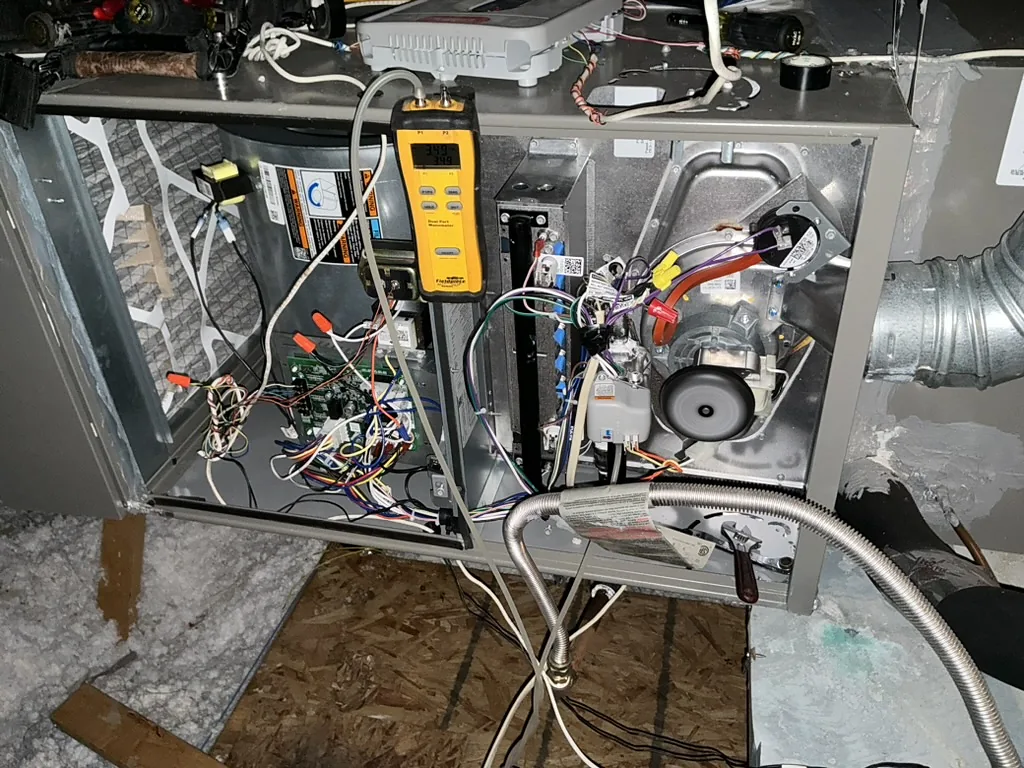
The system measures, verifies, and documents every critical aspect of home performance: airflow rates, static pressure, temperature differentials, humidity levels, duct integrity, and equipment function. Each data point is captured in real time and recorded permanently, creating a complete diagnostic record for every service visit.

Optimus ensures consistency, safety, and accuracy across every home we evaluate. By standardizing how we collect and interpret diagnostic data, we eliminate guesswork and deliver repeatable results—regardless of which technician performs the work. This is how we guarantee that every homeowner receives the same high level of precision and care.

Why We Built It In-House

Most HVAC companies use off-the-shelf software designed for generic service businesses—plumbers, electricians, pest control. These platforms weren't built for the technical complexity of modern HVAC diagnostics. They track appointments and invoices, but they can't capture airflow data, static pressure readings, humidity levels, or the dozens of other variables that determine whether a home is truly comfortable.

We needed something purpose-built. A system that could handle the nuances of our diagnostic process, document findings in real time, and tie every measurement back to comfort outcomes. When we couldn't find it, we built it ourselves.

Building our own system gave us complete control over the diagnostic workflow, data capture, and customer experience. It allowed us to integrate every piece of the operation—from initial contact to final quality check—into a single, seamless process that's constantly evolving based on real-world field data.

Our Internal System (Built In-House)

Too Cool Air is powered by a custom-built FSM/CRM platform that runs every aspect of the business. Internally, we call it Optimus. It's not a product we sell or license—it's infrastructure built exclusively for our operation.

What It Does

  • Scheduling & Dispatch: Real-time coordination between office and field technicians
  • Customer Management: Complete service history, system data, and diagnostic records
  • Inventory & Parts: Real-time tracking from warehouse to installation
  • Financial Operations: Approved QuickBooks integration access (bi-directional sync) for seamless accounting
  • Performance Analytics: Tech metrics, job completion rates, and quality tracking across all departments

The system acts as the central nervous system for the entire operation. Every service call, diagnostic finding, part ordered, invoice generated, and quality check flows through it. It ensures nothing falls through the cracks, and every team member—from dispatch to field techs to accounting—has the information they need in real time.

The Airflow Optimizer: The Comfort Science Engine

While our internal system runs the business, the Airflow Optimizer is the diagnostic engine our technicians use in the field. It's a purpose-built tool designed to solve one problem: identify and fix the root causes of comfort issues in North Texas homes.

How It Works

1. System-Wide Data Capture

The Optimizer collects dozens of diagnostic data points during a Comfort Audit: static pressure readings, airflow measurements per zone, temperature differentials, humidity levels, duct leakage, refrigerant charge accuracy, blower performance, and more. Every measurement is timestamped and recorded.

2. Performance Analysis

The system compares actual performance against engineered design specs and manufacturer baselines. It identifies deviations—whether it's excessive static pressure, undersized return airflow, leaky ducts, or improper refrigerant charge—and flags them for correction.

3. Prioritized Recommendations

Based on the data, the Optimizer generates a prioritized list of corrective actions. It doesn't just tell you "your AC is low on refrigerant"—it explains why the refrigerant is low, what impact it's having on comfort and efficiency, and what needs to happen to fix it permanently.

4. Continuous Improvement

Every job we complete feeds back into the system. We track what worked, what didn't, and how different fixes perform over time. This allows us to refine our diagnostic process and ensure we're always improving.

The Airflow Optimizer isn't just a data collection tool—it's a decision-making engine. It helps our technicians see the full picture, understand how every component of the HVAC system interacts, and deliver solutions that actually work long-term.

Built for DFW Homes

North Texas homes present unique challenges that generic HVAC diagnostics often miss:

Extreme Temperature Swings

DFW sees 100°F+ summers and sub-freezing winters. Systems must handle both extremes efficiently, which requires precise diagnostics for heating and cooling performance.

High Static Pressure Issues

Many DFW homes suffer from undersized ductwork and poor airflow design. High static pressure kills efficiency, shortens equipment life, and creates hot/cold spots.

Two-Story Challenges

Most North Texas homes are two-story with single-zone systems. Balancing airflow between floors requires precise measurements and strategic adjustments.

Attic-Mounted Equipment

Attic temperatures can exceed 150°F in summer. Duct leakage and poor insulation compound the problem, making diagnostics critical for efficiency.

Our diagnostic system was built specifically to address these regional realities. It's not adapted from a national template—it's engineered from the ground up for the way DFW homes are built, the climate they operate in, and the comfort challenges homeowners face.

The Difference It Makes

Most HVAC companies show up, check the basics, and offer a fix based on experience and instinct. We show up with a purpose-built diagnostic system that captures real data, identifies root causes, and delivers solutions backed by engineering principles.

This isn't about being high-tech for the sake of it. It's about solving problems correctly the first time, eliminating guesswork, and giving homeowners the confidence that their HVAC system is truly optimized for comfort and efficiency.